The Palestinian keffiyeh is much more than a scarf. A symbol of resistance, a statement accessory and a piece of cloth full of history, it is worn around the neck on the streets of London as in the squares of Ramallah. Whether you want to understand its history, learn how to tie it or choose your own, this article tells you everything about the keffiyeh.
Contents
What is a keffiyeh?
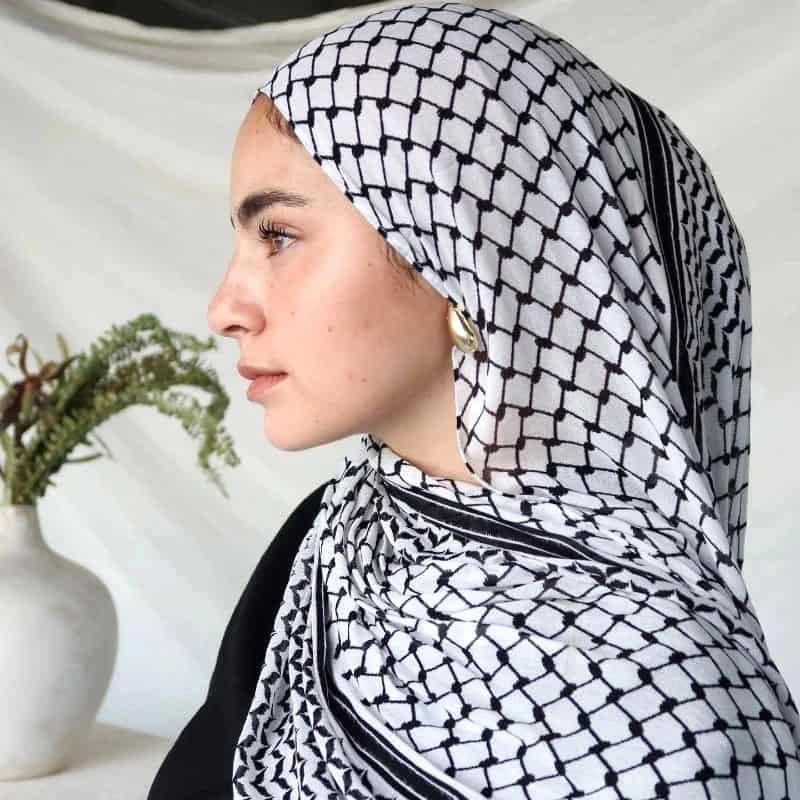
The keffiyeh (also spelled kufiya, kufiyeh or keffieh, and sometimes called a shemagh) is a traditional cotton scarf, sometimes blended with linen or wool. It is instantly recognisable by its pattern: a weave of checks and interlaced lines, most often black and white, but also red and white, green, blue or multicoloured.
Originally, it was a practical accessory worn by farmers and Bedouins of the Levant to protect themselves from sun, wind and sand. Over time, it became one of the most recognisable symbols in the world, associated with the Palestinian cause and with peoples’ resistance.
Discover our Palestinian keffiyeh collection
Keffiyehs in many colours — free tracked uk delivery on orders over £40
Origin and history of the Palestinian keffiyeh
The keffiyeh was born in the countryside of the Levant, long before it became a political marker. Palestinian, Jordanian and Syrian farmers have worn it every day for centuries. In Iraq, a similar version called the kufiya is also common.
It was during the 20th century that the keffiyeh took on a strong political meaning. During the Arab Revolt of 1936–1939 against the British Mandate in Palestine, the fellahin (peasant farmers) wore it as a sign of resistance. Palestinian fighters adopted it, and it quickly became a collective symbol of belonging and struggle.
The figure who anchored the keffiyeh in the world’s imagination for good was Yasser Arafat, leader of the PLO, who wore it at almost every public appearance from the 1960s onwards. His distinctive way of draping it in a triangle over his shoulder — said to evoke the map of historic Palestine — became iconic.
Since then, the keffiyeh has crossed decades and continents. It is worn by human rights activists, artists, public figures and millions of people around the world in solidarity with Palestine.
What the keffiyeh means today
Today, the keffiyeh has a double meaning. It is first of all a practical scarf, valued for its lightness and versatility. But above all, it has become a powerful symbol of solidarity, identity and resistance.
Wearing one is a statement. Not necessarily an elaborate political speech, but a simple message: I remember, I support, I stand with you. That’s why you see it at solidarity marches for Palestine, in artistic and cultural circles, and more and more in ethical, activist fashion.
The pattern itself carries meaning. The bold lines are often said to evoke the historic trade routes of the Middle East. The fishnet pattern recalls the fishermen of the Mediterranean coast. The leaf-like motif represents olive leaves and the land. Together, they tell the story of a people rooted in their land.
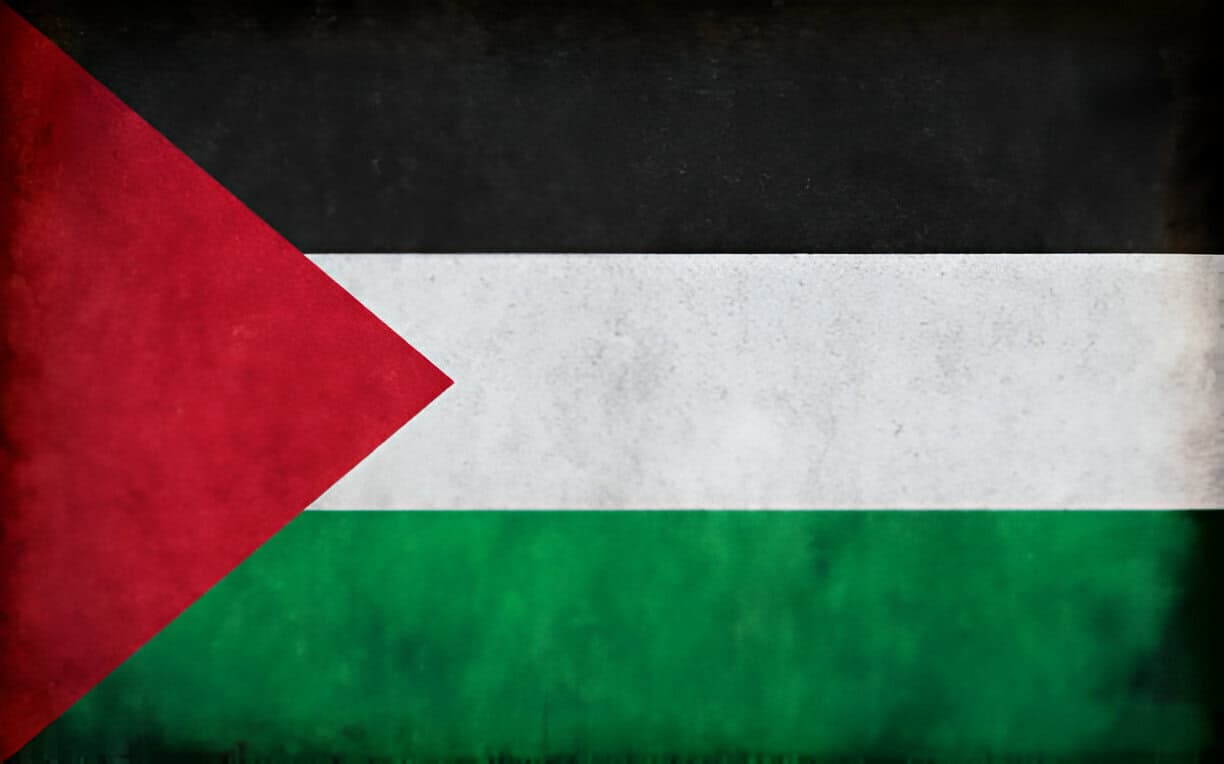
Did you know? The watermelon has become another strong Palestinian symbol, because its colours — red, white, green and black — match those of the Palestinian flag. You’ll find it on Palestine badges and many accessories.
Keffiyeh colours and their meanings
There isn’t just one keffiyeh, but several variations in different colours, each with its own symbolism:
Black and white keffiyeh
The most iconic. Worn by Yasser Arafat, it became the symbol of Palestinian resistance above all others. It is the most recognised keffiyeh in the world.
Red and white keffiyeh
Traditionally associated with Jordan, it is also widely worn in Palestine and the diaspora. Red symbolises sacrifice and solidarity between Arab peoples.
White keffiyeh
The white keffiyeh represents peace and hope. Simple and elegant, it is easy to wear every day and goes with any outfit.
Blue keffiyeh
Less common, the blue keffiyeh is often associated with the Mediterranean Sea and the coastal communities of the Levant. A popular modern variation.
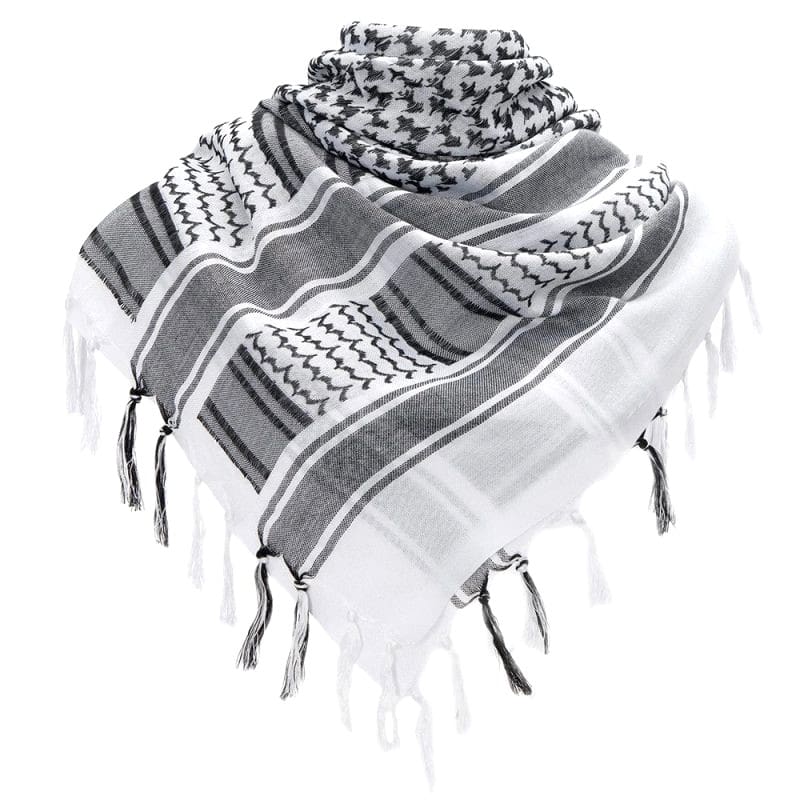
The white keffiyeh — a symbol of peace and hope
How to tie a keffiyeh: 4 main ways
There are many ways to wear a keffiyeh. Here are the four most common, from the simplest to the most elaborate:
1. As a simple scarf
Fold the keffiyeh into a rectangle and wrap it around your neck, with both ends hanging loose at the front. It’s the most versatile way to wear it, suitable for every season — ideal for beginners.
2. As a triangle over the shoulders
Fold the keffiyeh into a triangle, place the point at the front and let the two corners fall behind your back. This is the iconic style popularised by Yasser Arafat, and it shows off the woven pattern.
3. As a snood
Wrap the keffiyeh several times around your neck to make a warm snood — perfect for a British winter. Keep the knot loose so the fabric still drapes nicely.
4. On the head
Place the keffiyeh, folded into a triangle, on your head with the point at the front. Hold it in place with a cord (agal) or simply tie it under the chin. This is the traditional way of wearing it, true to its original protective purpose.
Whichever style you choose, let it drape naturally without pulling the fabric too tight. The keffiyeh is a living accessory — give it room to show its character.
Keffiyeh for men and women
The keffiyeh is a unisex accessory by nature. There’s no specific men’s or women’s keffiyeh — the same pieces are worn by everyone. What changes is how you wear it and what you pair it with.
Men’s keffiyeh
As a scarf over a coat or denim jacket, tied around the neck over a t-shirt, or as a triangle over a bomber jacket. Black and white or red and white keffiyehs are the most popular with men.
Women’s keffiyeh
As a light scarf over a dress or jumper, tied like a neckerchief, or even worn as a bandana. White and blue keffiyehs are especially popular with women.
Pair your keffiyeh with a Palestine t-shirt for a clear, confident message, or with a Palestine football shirt for a sporty look.
How to choose your keffiyeh
There are many different keffiyehs on the market, from traditional pieces to mass-produced fashion versions. Here’s what to look at:
- A regular pattern: a good keffiyeh has evenly woven checks, without misaligned lines or distortion.
- The weight of the fabric: it should feel light yet sturdy — not see-through, and not stiff.
- The tassels: they should be even and neatly finished.
- The origin: traditional Palestinian keffiyehs are woven in Hebron, home of the last keffiyeh factory in Palestine. If origin matters to you, check what the seller states.
- The material: pure cotton is the traditional choice. Some keffiyehs blend cotton and wool for extra warmth in winter.
Find your keffiyeh
White, black and white, red and white, blue and more — free tracked uk delivery on orders over £40
Frequently asked questions about the keffiyeh
What is a keffiyeh?
A keffiyeh is a traditional cotton scarf from the Levant, recognisable by its checked pattern. Originally a practical accessory to protect against the elements, it has become a strong symbol of Palestinian resistance and identity.
How do you tie a keffiyeh?
The simplest way is to fold it into a rectangle and wrap it around your neck like a scarf. You can also fold it into a triangle and drape it over your shoulders, wear it as a snood, or wear it on your head in the traditional way.
What is the difference between a keffiyeh and a keffieh?
They are different spellings of the same word. “Keffiyeh” is the usual English spelling and “keffieh” the French one. You will also see “kufiya”, “kufiyeh” and “shemagh”, depending on the region and language.
Why is the keffiyeh black and white?
The black and white keffiyeh is the most iconic in Palestine. Black symbolises resistance and memory, white peace and hope. It was the version worn by Yasser Arafat that made it recognisable worldwide.
Where can I buy a Palestinian keffiyeh in the UK?
You can buy a Palestinian keffiyeh from Palestine Wear. We offer several colours and styles, with free tracked UK delivery on orders over £40.
Is the keffiyeh only Palestinian?
The keffiyeh is worn in several countries in the Middle East (Jordan, Iraq, Saudi Arabia and others) in different forms and colours. But it is the black and white Palestinian keffiyeh that has become the best-known international symbol, thanks in particular to Yasser Arafat and the Palestine solidarity movement.