Keffiyeh, shemagh, ghutra: three words you often see used for the same thing. They are related, but they are not exactly the same scarf. The name changes with the region, the pattern and who wears it.
Here is a simple guide to tell them apart, and to choose the right one for you.
The keffiyeh: the Palestinian scarf
The keffiyeh (also spelt kufiya or kufiyah) is the square cotton scarf worn across the Levant, and the one most closely tied to Palestine. The classic Palestinian keffiyeh is black and white, with three recognisable motifs: a fishnet pattern, a border of olive leaves and bold lines often read as trade routes.
Once worn by farmers to protect against the sun, it became a national symbol in the 20th century. We tell the full story in our guide What is a keffiyeh?
The shemagh: the same family, another name
Shemagh (or shmagh) is the name used in Jordan, Iraq and the Gulf for a very similar checked scarf. It is most often red and white, as worn in Jordan and Saudi Arabia, but you will also find it in khaki, olive or black.
In the UK, “shemagh” is also the military word. British soldiers adopted it during desert campaigns because it protects the face and neck from sun, sand and wind. That is why many people searching for a “keffiyeh shemagh” are looking for a practical, outdoor scarf.
The ghutra: the plain Gulf headscarf
The ghutra is different. It is a plain white headscarf, worn mainly in Saudi Arabia, Qatar, the UAE and Kuwait, usually held in place with a black cord called an agal. It has no checked pattern. In some Gulf countries the red-and-white checked version is called a shemagh, and the plain white one a ghutra.
In short: a keffiyeh and a shemagh are the same type of checked scarf with different names and colours. A ghutra is plain white, with no pattern. If it is black and white with olive leaves, it is the Palestinian keffiyeh.
Keffiyeh vs shemagh vs ghutra at a glance
- Keffiyeh: Palestine and the Levant. Black and white (also red and white). Fishnet, olive leaves, lines. Worn as a scarf or headscarf, and a symbol of Palestinian identity.
- Shemagh: Jordan, Iraq, Gulf, armed forces. Red and white, khaki, olive, black. Checked pattern. Worn for protection outdoors and as everyday dress.
- Ghutra: Gulf states. Plain white. No pattern. Worn on the head with an agal.
Which one should you choose?
It depends on what you want it for:
- To show support for Palestine: the black-and-white keffiyeh is the most recognisable.
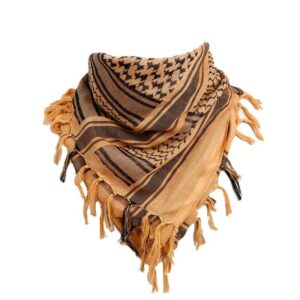
- For the outdoors, festivals or a military look: a khaki or military shemagh-style keffiyeh.
- For colour: red and white, or one of the many solidarity colours.
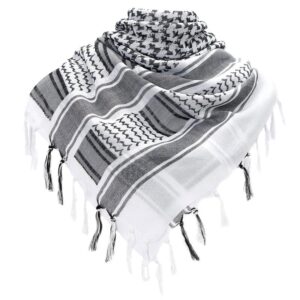
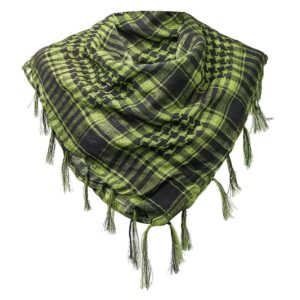
Military Keffiyeh Shemagh
The military look, for the outdoors and everyday wear.

Red Palestinian Keffiyeh
The red-and-white version, worn across the region.
Looking for more colours? Try the red and black keffiyeh, the green and white keffiyeh or the blue and white keffiyeh. Our guide where to buy a keffiyeh in the UK also helps you pick.
Frequently asked questions
What is the difference between a keffiyeh and a shemagh?
They are close cousins. Keffiyeh is the name used in Palestine for the checked cotton scarf with the fishnet, olive-leaf and line pattern. Shemagh is the name used in Jordan, the Gulf and by the military, usually for a red-and-white or plain-coloured checked scarf.
Is a ghutra the same as a keffiyeh?
No. A ghutra is a plain white headscarf worn mainly in the Gulf states, often held in place with a black cord called an agal. It has no checked pattern, unlike the keffiyeh or the shemagh.
Why do soldiers wear a shemagh?
British soldiers adopted the shemagh during desert campaigns in the Middle East because it protects the face and neck from sun, sand and wind. It has stayed popular with armed forces and outdoor enthusiasts ever since.
Which colour is the Palestinian keffiyeh?
The traditional Palestinian keffiyeh is black and white. The red-and-white version is also common, especially in Jordan, and many other colours are now worn as a sign of solidarity.