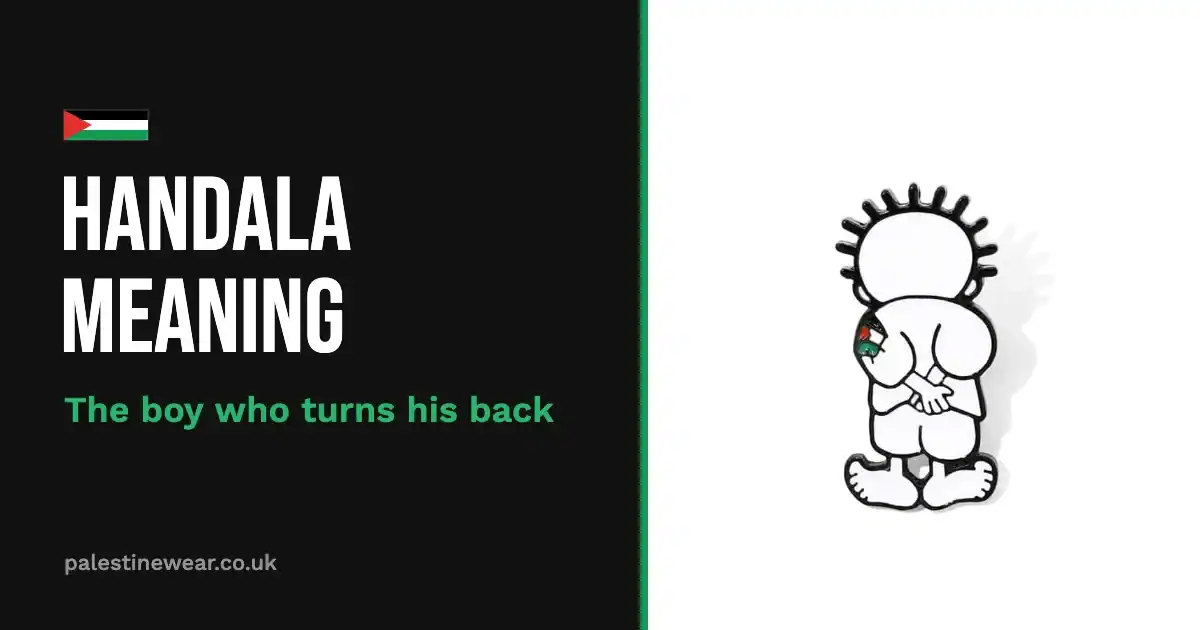
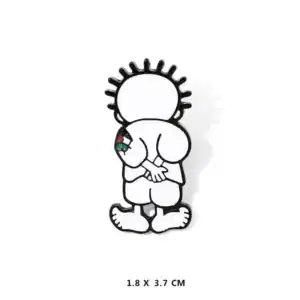
A small barefoot boy, hands clasped behind his back, turned away from us. You have probably seen him on a wall, a t-shirt, a badge or a poster. His name is Handala, and he has become one of the strongest symbols of Palestine.
Here is his story, what he stands for, and why he never turns around.
Who is Handala?
Handala (also spelt Hanzala or Hanthala) is a cartoon character created by the Palestinian cartoonist Naji al-Ali. He first appeared at the end of the 1960s in a Kuwaiti newspaper, in the corner of his creator’s drawings.
He is a boy of about ten, with spiky hair, patched clothes and bare feet. He never speaks: he watches. In Naji al-Ali’s cartoons, he is the silent witness of what the Palestinian people live through.
His name comes from the handal, a bitter plant that grows in the region (colocynth): a way of expressing the bitterness of exile, but also a plant that always grows back, even when it is cut.
Naji al-Ali, the creator of Handala
Born in Galilee around 1937, Naji al-Ali had to leave Palestine as a child in 1948 and grew up in a refugee camp in Lebanon. He became one of the most widely read cartoonists in the Arab world, publishing tens of thousands of drawings over his career.
He explained that Handala was ten years old, his own age when he left Palestine, and that he would not grow up until he could return home. Naji al-Ali was shot in London in 1987 and died weeks later. Handala lived on long after him.
Why does Handala always have his back turned?
In the earliest drawings, Handala sometimes faces the reader. From the early 1970s, Naji al-Ali drew him always from behind, hands clasped behind his back. According to his creator, the gesture expresses refusal: of imposed solutions and of indifference to the situation of Palestinians.
He also said that Handala’s face would only be seen on the day the Palestinian people regain their freedom and dignity. That is why, to this day, nobody knows his face.
In short: Handala is ten years old forever, barefoot, turned away, hands clasped behind him. Every detail has a meaning: exile, the poverty of the camps, refusal, and waiting for the return.
What Handala symbolises
- A stolen childhood: a child who never grows up, frozen at the moment of exile.
- The right of return: he will only grow up and turn around when he can go home.
- Conscience: he watches what is happening and invites us to look with him.
- Resilience: like the bitter plant he is named after, he is always there.
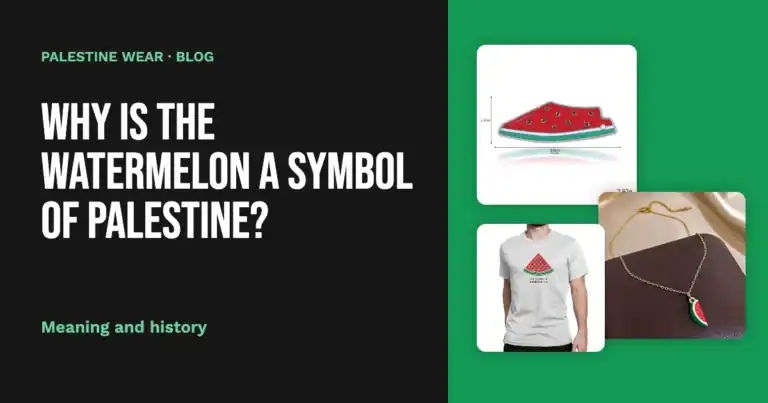
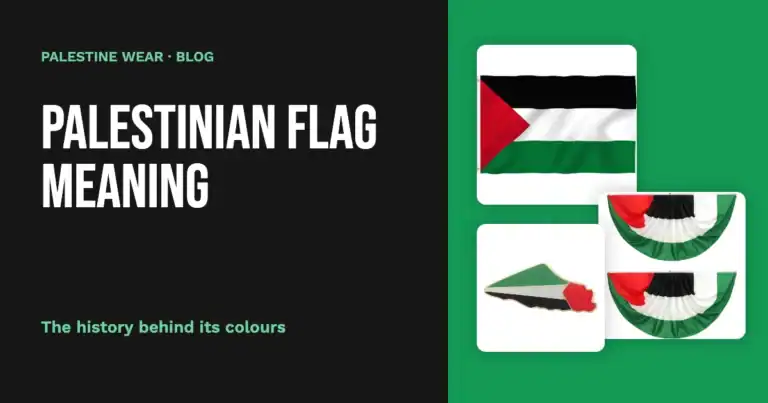
That makes him a symbol apart, next to the flag, the keffiyeh or the watermelon: he does not stand for a territory or a colour, but for a person, a child everyone can understand.
Handala today, and the Handala boat
Decades after he was created, Handala is everywhere: on the walls of refugee camps and Palestinian towns, in street art around the world, on posters, tattoos, t-shirts and jewellery. In 2025, a Freedom Flotilla boat carrying aid towards Gaza even sailed under his name, the Handala.
Wearing Handala means carrying a message many people recognise instantly, without a single word.
Frequently asked questions
Who created Handala?
Handala was created by Naji al-Ali, a Palestinian cartoonist who grew up in a refugee camp in Lebanon, at the end of the 1960s.
Why is Handala 10 years old?
It was Naji al-Ali’s age when he had to leave Palestine. He said Handala would not grow up until he could return home.
Why does Handala turn his back?
According to his creator, it is a gesture of refusal in the face of imposed solutions and indifference. His face would only be seen on the day Palestinians regain their freedom.
What does the name Handala mean?
It comes from the handal, a bitter plant of the region (colocynth). It evokes the bitterness of exile, and a plant that always grows back.
What was the Handala boat?
In 2025 a boat of the Freedom Flotilla sailed towards Gaza under the name Handala, carrying humanitarian aid. It was named after the character as a symbol of the children of Palestine.
Read more: the meaning of the Palestinian flag and what is a keffiyeh.