A meaningful symbol at the heart of Palestinian identity
Why wear a Palestine bracelet? The question goes beyond looks. This discreet piece of jewellery carries a political, cultural and humanitarian message. It lets you show support, affirm an identity or express attachment to a cause that has shaped international debate for decades.
Today, visual symbols play a central role in public life. An accessory can become a means of expression. Wearing a bracelet in the Palestinian colours is often a way of taking a clear position — and of being part of something collective.
Why wear a Palestine bracelet as a symbol of identity?
In many cultures, jewellery passes on a heritage. It tells a story. In the Palestinian context, the colours black, white, green and red refer to the national flag. They also evoke collective memory and attachment to the land.
Wearing a Palestine bracelet is therefore a way to affirm a cultural identity. For some, it represents a link with the diaspora. For others, it symbolises international solidarity. Either way, the object carries meaning.
A strong cultural marker
Palestinian symbols hold an important place in contemporary culture. The keffiyeh, for example, has become a sign recognised all over the world. In the same way, the bracelet uses these visual codes in a more discreet format.
The accessory lets you express your attachment without saying a word. It works as a silent but recognisable sign — which largely explains its popularity.
A gesture of political solidarity
Why wear a Palestine bracelet at a time of geopolitical tension? Because symbols play a role in mobilisation. They express support for human rights and for the right of peoples to self-determination.
For years, international media such as BBC News have covered the debates around the recognition of Palestine and living conditions in the Palestinian territories. In this context, wearing a symbol becomes a political act.
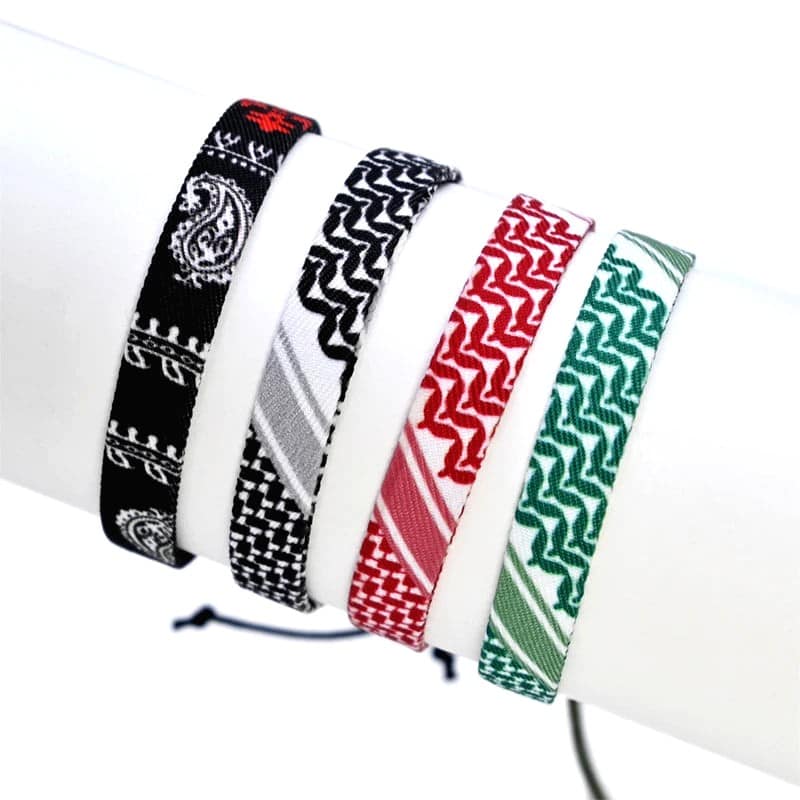
Palestine Fabric Bracelet
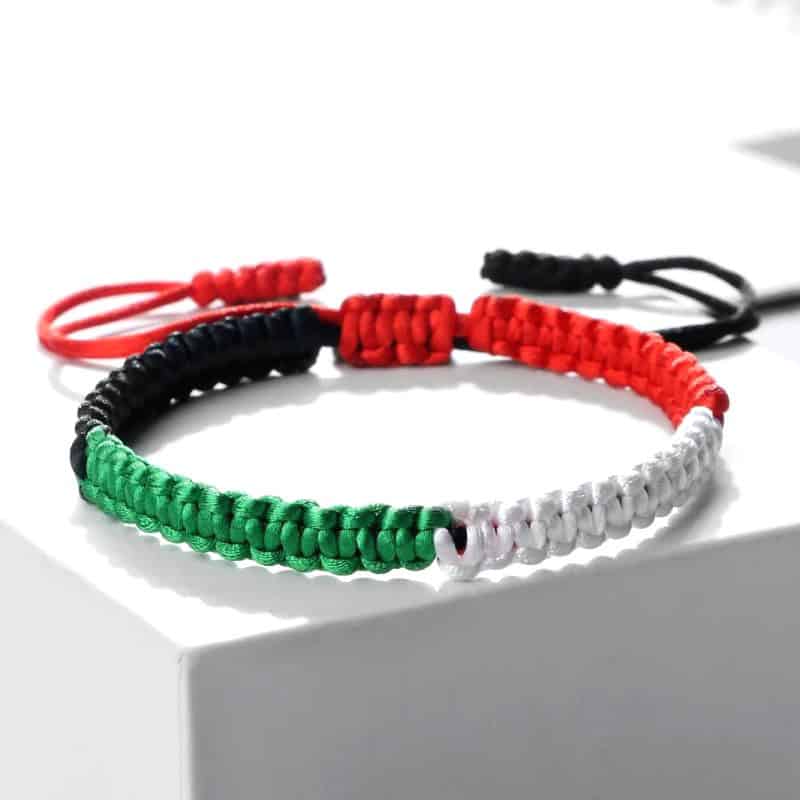
Palestine Flag Bracelet
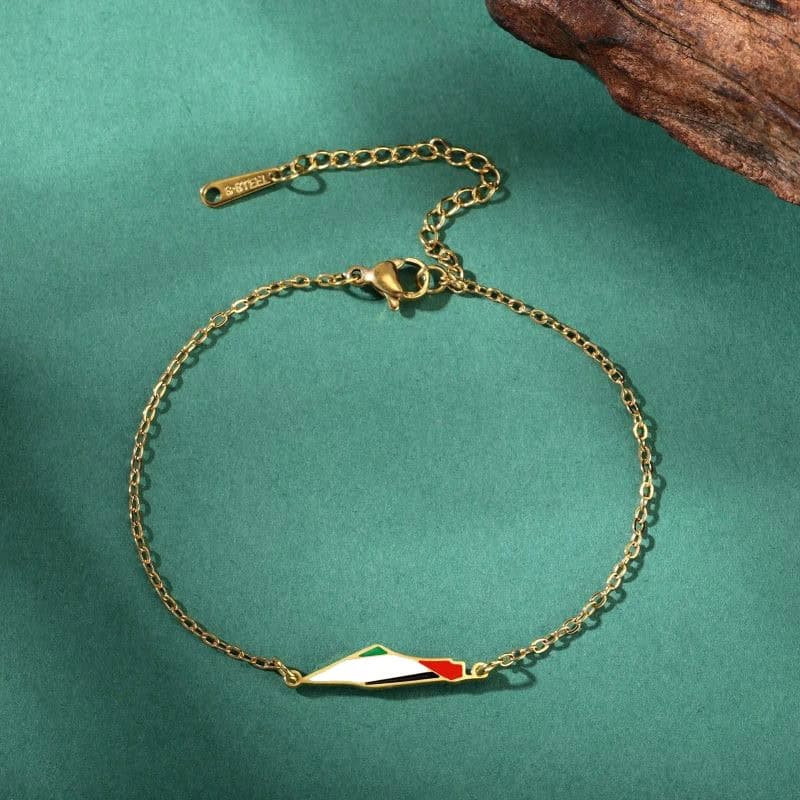
Palestine Map Bracelet
Visible but peaceful support
Unlike a slogan or a poster, a bracelet stays understated. Yet it still sends a clear message. It shows a personal commitment without necessarily being confrontational.
It also encourages conversation. It can spark discussions and open a dialogue about the history, diplomacy and humanitarian issues of the region.
An expression of humanitarian solidarity
Beyond politics, many people associate the bracelet with a humanitarian dimension. Successive crises have highlighted the economic and social hardship in the Palestinian territories. In this context, symbols also become signs of compassion.
Wearing a bracelet can reflect a concern for social justice and dignity. This simple gesture is a reminder that behind the geopolitical debates are civilians facing complex realities.
A personal, committed choice
Why wear a Palestine bracelet rather than another symbol? Because it combines discretion with strong meaning. It fits easily into everyday life, yet keeps a powerful symbolic reach.
Statement accessories are also part of a wider trend where fashion and political awareness meet. Some people choose a Palestine t-shirt to show where they stand. The bracelet offers a more subtle alternative.
A meaning that evolves over time
Today, there are many answers to why wear a Palestine bracelet. For some, it is a tribute. For others, a political message. And many see it as a symbol of hope and peace.
Ultimately, this piece of jewellery goes beyond its material value. It becomes a visual language, expressing identity, solidarity and a desire for recognition. That symbolic richness is exactly what makes it so meaningful in public life today.