Palestine Flag
Show your support with a Palestine flag. With its four colours – black, white, green and red – the Palestinian flag is one of the most recognisable symbols of solidarity, at marches, at events and at home.
Choose from classic flags, small hand flags, round flags and banners, watermelon designs and flags combining Palestine with Lebanon, Algeria, Morocco, Tunisia or Jordan. Pair your flag with a keffiyeh or a Palestine badge to complete the look.
Showing 13–13 of 13 results
-
 £20.99
Showing 13–13 of 13 results
The Palestine flag: history, meaning and ways to show it
The Palestine flag is far more than a piece of fabric. It carries history, memory and commitment. For decades, it has been raised on every continent by millions of people expressing their solidarity with the Palestinian people. Understanding what it represents explains why so many choose to display it.
The colours of the Palestinian flag and their meaning
The official Palestinian flag has three horizontal bands – black, white and green – with a red triangle on the left. Each colour carries a meaning inherited from the history of the Arab national movement:
- Black stands for collective memory and the hardships endured by the Palestinian people.
- White represents peace and the hope for justice.
- Green evokes the land of Palestine, its olive groves and the attachment to the land.
- Red embodies sacrifice, courage and solidarity.
These pan-Arab colours also appear on the flags of Jordan and other Arab nations, a sign of a shared history and culture.
The different types of Palestine flags
Beyond the official flag, many variations express different sides of solidarity with Palestine. Here are the most meaningful designs:
Free Palestine flag
The most direct message. Carried at marches and gatherings, it has become one of the best-known slogans of the international solidarity movement.
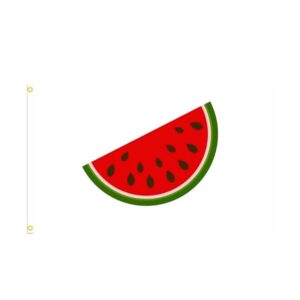
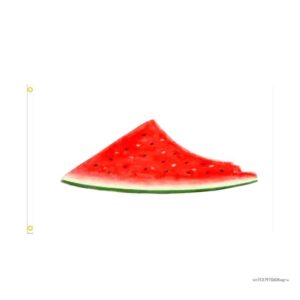
Watermelon Palestine flag
The watermelon shares the four colours of the flag and has become a powerful symbol of creative, cultural resistance.
Palestine map flag
The map of historic Palestine in the colours of the flag, a strong symbol of attachment to the land.
Palestine solidarity flag
The classic 90 × 150 cm flag to show your support clearly, at marches, community events or at home.
Solidarity flags: Palestine and the Arab world
Support for Palestine goes beyond borders. Many people from the Algerian, Tunisian, Moroccan, Lebanese and Jordanian communities in the UK express a strong solidarity with Palestine. These combined flags symbolise that brotherhood:
- Algeria Palestine flag – one of the most popular solidarity flags, especially at football matches.
- Tunisia Palestine flag – for the brotherhood between two peoples.
- Morocco Palestine flag – much loved by Moroccan supporters of Palestine.
- Jordan Palestine flag – a symbol of the deep historical ties between the two peoples.
A symbol seen all over the world
Today, the Palestinian flag is one of the most widely raised flags at public demonstrations. It is seen at marches in London, Manchester, Glasgow, Birmingham, Paris, New York and Johannesburg, and it has become a universal symbol of the struggle for human rights and self-determination.
Online, the Palestinian flag emoji is one of the most used during times of tension in the Middle East. Many people want to go further than sharing online and choose to display their support physically, at home or at events.
Where and how to display your flag
- In your window or on your balcony: the most visible gesture, sending a clear message to your street.
- At home: on the wall of a living room, bedroom or office, it becomes a meaningful decoration.
- At a march: small hand flags and banners are designed to be held and waved.
- At community events: Palestine flag bunting is perfect for decorating a hall, a stall or a street party.
- As a gift: a Palestine flag is a strong, symbolic present for someone who cares about the cause.
How to use and care for your Palestinian flag
Indoors, our flags hang easily with hooks or pins on a wall or window. Outdoors, reinforced edges and metal grommets make them resistant to wind and weather. To keep the colours bright, hand wash in cold water and avoid the tumble dryer. Stored folded in a dry place, your flag will keep its colours for years.
The Palestinian flag in popular culture
Over the decades, the Palestinian flag has moved beyond politics into global popular culture. Artists, musicians, athletes and public figures display it to show their solidarity, and younger generations see it as a strong marker of identity and culture.
In football especially, the flag is a familiar sight in the stands, and the Palestinian national team keeps playing despite extraordinarily difficult conditions, a symbol of resilience in itself. In fashion, the flag now appears on clothing, accessories and everyday objects, turning solidarity into an everyday gesture.
Frequently asked questions about the Palestine flag
Can I display a Palestine flag in the UK?
Displaying a Palestinian flag is generally lawful in the UK as part of freedom of expression, at home, at your window or at a march, as long as it is not used to incite hatred or violence. At large demonstrations, follow any conditions set by the police.
What size of Palestine flag should I choose?
For a window or balcony, 90 × 150 cm is the most common and visible size from the street. For a wall at home, 60 × 90 cm suits most rooms. For marches, small 14 × 21 cm hand flags are the most practical.
What is the difference between the Free Palestine flag and the classic flag?
The classic flag is the official flag of the State of Palestine with its four colours. The Free Palestine flag usually adds a message or design expressing the call for freedom. Both are symbols of support for the Palestinian people.
Why is the watermelon a Palestinian symbol?
The watermelon became a symbol of Palestinian resistance after 1967, when the Palestinian flag was banned in the occupied territories. Artists painted watermelons whose colours – red, white, green and black – matched the banned flag, turning the fruit into an act of creative cultural resistance.
Pair your flag with other Palestinian symbols
- The Palestinian keffiyeh – the ultimate symbol, to wear around your neck every day.
- Palestine bracelets – a discreet but constant commitment.
- Palestine football shirts – to support Palestinian football.
- Palestine badges – including the famous watermelon pin, perfect on a bag or jacket.
- Palestine t-shirts – to show your message clearly.
Show your solidarity with Palestine
Free UK delivery on orders over £40 — dispatched within 2–3 working days